
Service overview
How we run this capability
- 01Drawing and DFM review
- 02Alloy, tooling and process plan
- 03Sample measurement and approval
- 04Traceable serial production
Aluminum Casting
From Complex Designs to High-Performance Industrial Components
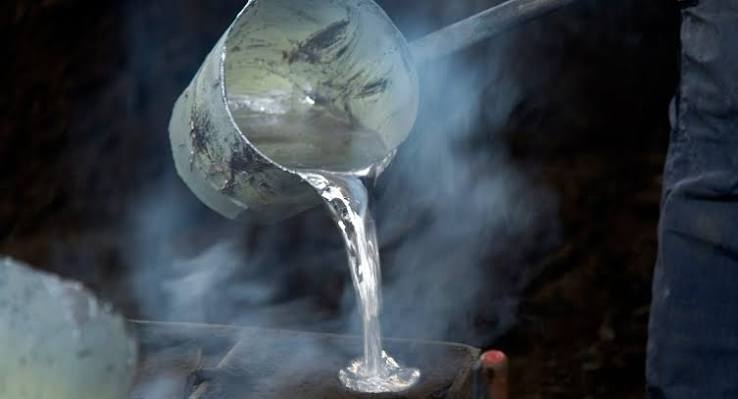
Aluminum casting is one of the fundamental metal manufacturing methods in which molten aluminum or aluminum alloys are poured into a mold with a defined geometry to form the desired part. By combining light weight, mechanical performance, corrosion resistance, machinability, and design flexibility, aluminum castings are used today in machinery, automotive, energy, lighting, HVAC, vacuum technologies, power transmission systems, agricultural machinery, railway systems, and many other industries.
The true advantage of aluminum casting is not merely the shaping of metal inside a mold. When the right alloy, the appropriate casting method, a well-designed mold, a controlled process, and the correct machining strategy come together, high-performance components with complex geometries can be manufactured repeatedly in serial production.
For this reason, a successful aluminum casting project does not begin in the foundry, but with a proper assessment of the part's manufacturability.
Why Aluminum?
In industrial product design, material selection directly affects the part's weight, mechanical performance, manufacturing method, service life, and total cost. The main reason aluminum is so widely used across different industries is its ability to combine multiple engineering advantages in a single material.
The low density of aluminum provides a significant weight advantage compared with many traditional engineering materials such as steel and cast iron. This characteristic helps reduce total system weight, particularly in moving systems, automotive applications, machinery components, and portable equipment.
Aluminum also has good corrosion resistance in many environments due to its naturally forming protective oxide layer. When used with the appropriate alloy and surface treatments, it can provide a long service life in outdoor applications.
Its high thermal conductivity also makes aluminum valuable in applications where thermal management is important, such as LED lighting housings, electronic enclosures, and motor and power-electronics components.
In addition, its high machinability allows post-casting CNC operations to be performed precisely. Bearing seats, sealing surfaces, connection holes, flanges, threads, and critical assembly points can be precision-machined, transforming the casting into a functional engineering component.
Key Advantages of Aluminum Casting
One of the most important characteristics of aluminum casting technology is design freedom. Geometries that could cause high material loss or long machining times if produced from a completely solid block by machining can be manufactured much closer to their final form with the correct casting design.
Ribs, connection points, flanges, housing structures, different wall geometries, and functional details can be integrated into a single component. In some applications, this can enable multiple parts to be consolidated into one component, reduce assembly operations, and support the development of more compact product designs.
Casting's ability to produce parts close to the final geometry - near-net-shape manufacturing - can also help reduce the amount of subsequent machining. Removing less material can provide significant advantages, particularly in serial production, in terms of cycle time, material use, and total manufacturing cost.
With the correct process design, aluminum casting is a scalable manufacturing method that can be adapted to different production scenarios, from low- and medium-volume production to high-volume serial production.
Not All Aluminum Casting Methods Are the Same
Aluminum casting does not refer to a single manufacturing method. The part's size, geometry, wall structure, mechanical property expectations, surface requirements, tolerances, production volume, and subsequent CNC operations determine which casting technology is most suitable.
Within Alutekworks' manufacturing solutions, Gravity Die Casting, Low Pressure Die Casting (LPDC), and Sand Casting are evaluated according to the requirements of each project.
Each of these methods has different technical and economic advantages. Therefore, the fundamental approach to selecting the correct casting process is not to regard one method as superior to another, but to identify the manufacturing method best suited to the part's requirements.
Gravity Die Casting
In gravity die casting, molten aluminum fills a permanent metal mold under the effect of gravity, without the application of external high pressure.
The reusability of the metal mold provides a significant advantage, particularly in regular serial-production projects. Under appropriate process conditions, good surface quality, dimensional repeatability, and strong mechanical properties can be achieved.
Gravity Die Casting is a suitable manufacturing method for machinery components, housings, covers, connection parts, automotive components, gearbox parts, lighting elements, and various industrial applications.
One of the method's important advantages is its ability to provide a strong balance among tooling investment, production volume, part geometry, mechanical performance, and unit manufacturing cost.
Particularly in OEM projects where the same part will be produced regularly in defined quantities, gravity die casting can provide an efficient, long-term manufacturing alternative.
Low Pressure Die Casting
In low pressure die casting, molten aluminum is directed into the mold cavity with controlled low pressure. The controlled movement of the metal into the mold allows filling behavior and the solidification process to be managed more precisely.
LPDC can provide advantages particularly for components where controlled mold filling, process stability, and specific mechanical-performance expectations are important.
This method, which can be preferred for manufacturing custom aluminum components used in automotive, machinery, energy, power transmission systems, and various industrial applications, also offers significant advantages in terms of process repeatability in serial production.
Part geometry, production volume, mechanical expectations, and subsequent machining requirements should be evaluated together to determine whether LPDC is suitable for the project.
Sand Casting
Sand casting is one of the oldest and at the same time most flexible manufacturing methods in the aluminum casting industry. In this method, a mold cavity matching the part geometry is formed in special foundry sand, and molten aluminum is poured into this cavity to create the shape of the part.
One of the most important advantages of sand casting is that it does not require a permanent metal mold. This characteristic provides significant manufacturing flexibility, particularly for prototypes, low-volume production, large parts, and geometrically special components.
For low-volume projects where investment in a metal mold is not economical, sand casting can be an effective alternative that reduces initial costs. It also enables the production of parts that may be difficult to manufacture by other casting methods because of their size and geometry.
Machine housings, pump and valve components, large enclosures, energy equipment, prototype parts, and custom industrial components are among the applications for which sand casting technology may be considered.
Depending on application requirements, sand-cast parts can undergo CNC machining operations after casting to achieve the required precision on critical connection surfaces, holes, flanges, bearing areas, and other functional regions.
The surface quality and as-cast dimensional accuracy of sand castings generally differ from those achieved with metal-mold methods. Therefore, process selection must consider not only low tooling cost, but also the part's final tolerances, surface expectations, and required CNC operations.
Differences Between Gravity Die Casting, LPDC, and Sand Casting
The fundamental difference among the three technologies is not limited to how the metal is introduced into the mold. They also differ in mold structure, investment cost, production quantity, part size, surface quality, dimensional repeatability, and manufacturing economics.
Feature | Sand Casting | Gravity Die Casting | Low Pressure Die Casting |
Mold | Sand mold | Permanent metal mold | Permanent metal mold |
Filling | Generally by gravity | Gravity | Controlled low pressure |
Initial tooling investment | Relatively low | Medium | Relatively high |
Suitable production volume | Prototype / low volume | Medium-volume and serial production | Serial production |
Large-part flexibility | Very high | Part-dependent | Part-dependent |
Geometry flexibility | High | High | High |
As-cast surface quality | Relatively rougher | Better | Better |
Dimensional repeatability | Relatively low | High | High |
CNC machining requirement | Generally greater | Project-dependent | Project-dependent |
Suitability for prototypes | Very high | Project-dependent | Generally focused on serial production |
Serial-production economics | Advantageous at low volumes | Strong | Strong |
I believe this table should definitely be included on the page. A buyer or engineer who does not want to read the long text can understand the fundamental differences among the three methods in approximately 20 seconds.
Which Casting Method Should Be Preferred?
Selecting the correct casting technology requires the project's technical and commercial requirements to be evaluated together.
Sand casting can be a strong option for low quantities, prototypes, large parts, or special projects where investment in a metal mold is not economical.
Gravity die casting stands out in OEM projects that require a balanced solution among regular production volumes, good mechanical properties, surface quality, and process repeatability.
Low pressure die casting, on the other hand, can provide advantages in serial-production projects where controlled mold filling, process stability, and specific mechanical-performance requirements are priorities.
Therefore, the question should not be, “Which is the best aluminum casting method?”
The correct question is:
“Which casting method is the right one for this part's geometry, operating conditions, technical requirements, and annual production volume?”
This is precisely where Alutekworks' engineering approach comes into play. By evaluating the technical drawing, tolerances, operating conditions, production volume, and subsequent CNC operations together, the aim is not merely to make the part manufacturable, but to manufacture it using the technically and economically correct method.
Casting Quality Begins with Mold Design
Correct mold and process design form the foundation of a good aluminum casting.
The flow of molten metal within the mold, solidification behavior, feeding zones, wall transitions, and the manner in which the part is removed from the mold can directly affect the manufacturing result. Failure to evaluate the part geometry in accordance with the casting method can lead to unnecessary manufacturing difficulties, additional machining operations, or quality problems.
For this reason, we do not view the mold-development process merely as creating the negative geometry of the part. The mold is one of the fundamental engineering tools of the serial-production process.
Manufacturability-Focused Engineering - DFM
A technical drawing being geometrically correct does not mean that the part can be manufactured by the most efficient method.
For successful serial production, wall thicknesses, section transitions, radii, casting direction, machining allowances, critical tolerances, and tooling requirements must be evaluated together.
The fundamental aim of the Design for Manufacturability (DFM) approach is not to change the function of the customer's product, but to achieve the same function through a more reliable and efficient manufacturing process.
Reducing unnecessary machining operations, improving the casting geometry, or making critical areas more suitable for production can create significant cost and process advantages, particularly in high-volume projects.
From Casting to Precision Component: CNC Machining
In many industrial applications, casting is not the final stage of production.
Precision CNC operations may be required in areas such as bearing seats, sealing surfaces, connection points, flanges, holes, and threads to make the part functional.
Therefore, casting and CNC machining should not be regarded as two independent processes, but as complementary stages in the manufacturing chain of the same component.
Designing the casting geometry at the very beginning of the project with subsequent CNC operations in mind provides significant advantages in terms of both precision and manufacturing economics.
By combining its aluminum casting capability with CNC machining, Alutekworks aims to provide its customers with components that go beyond raw castings, are machined in accordance with the technical drawing, and are ready for subsequent assembly operations.
From Prototype to Serial Production
In a new aluminum casting project, the prototype and initial-sample stage is one of the most important validation points before serial production.
The geometry, casting behavior, CNC operations, critical dimensions, and functional requirements are evaluated using the initial parts. Based on the results obtained, the necessary process improvements are implemented to make serial production more controlled and repeatable.
The objective here is not merely to produce a successful initial sample. The real objective is to establish a robust process through which the same component can be produced sustainably in repeat production.
Aluminum Casting and Sustainable Manufacturing
One of aluminum's important characteristics is its high recyclability. However, sustainable manufacturing is not limited to the recyclability of the material alone.
Correct part design, selection of the appropriate casting method, reduction of manufacturing losses, prevention of unnecessary CNC operations, development of long-lasting components, and optimization of serial-production processes also contribute to more efficient use of resources.
For this reason, we evaluate sustainability together with the efficiency of the entire process, from material selection to production planning.
In Which Industries Is It Used?
The broad design and manufacturing possibilities of aluminum casting enable the technology to be used in many different industries.
Aluminum cast components are used in numerous sectors, from urban furniture and outdoor lighting systems to machinery; from automotive components to piston and engine technologies; from gearbox and transmission systems to vacuum equipment; from solar energy to building systems; from agricultural machinery to railway systems; and from HVAC equipment to conveyor and material-handling systems.
Each industry's expectations are different. While thermal management is a priority in an LED luminaire housing, precision-machined bearing seats may be critical in a gearbox housing, sealing surfaces in a vacuum component, and corrosion resistance in outdoor equipment.
Therefore, the correct aluminum casting solution must be developed not only according to the geometry of the part, but also according to what the part is required to do.
From Technical Drawing to Serial Production
For Alutekworks, aluminum casting is a manufacturing discipline far more comprehensive than pouring molten metal into a mold.
Technical-drawing evaluation, manufacturability analysis, mold development, selection of the appropriate casting method, Gravity Die Casting or Low Pressure Die Casting, CNC machining, surface preparation, technical validation, and serial production are parts of a single, complementary manufacturing chain.
In line with our OEM manufacturing approach, we produce custom aluminum components according to our customers' technical drawings and project requirements instead of standard products. Our aim is not merely to manufacture the part, but to establish a technically reliable, manufacturable, and sustainable process from prototype through repeat serial production.
Because for us, a successful casting is not merely metal that has taken the correct shape.
It is aluminum given the correct function through the correct engineering.
 HOW WE WORK